Do you really need indicators to become profitable — or is price enough?
If you’ve spent any time in the trading world, you’ve probably heard both sides:
- “Indicators are useless.”
- “Price action is king.”
- “Just add RSI + MACD + Moving Averages.”
- “Trade naked charts like institutions.”
So what’s the truth?
Do indicators actually work in forex trading… or is price action enough? Let’s talk about it in a realistic way — without extremes.
What Is Price Action Trading?
Price action simply means trading based on what price is doing right now — not what an indicator says after the fact. Price action traders focus on:
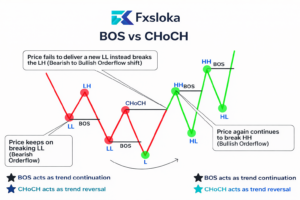
- market structure (higher highs / lower lows)
- key support and resistance
- liquidity sweeps
- candlestick behavior
- momentum shifts
In simple terms, Price action is reading the story of the market directly.
What Are Indicators in Forex Trading?
Indicators are tools built from price data. Examples include:
- Moving Averages
- RSI
- MACD
- Bollinger Bands
- Stochastic Oscillator
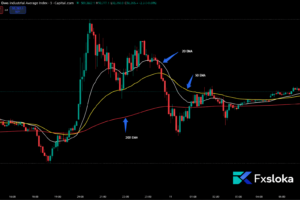
Indicators can help visualize trends or momentum but they all share one truth. Indicators are derived from price — meaning they lag behind it.
Why Many Traders Quit Using Too Many Indicators
Most beginners start the same way they open TradingView…
Add:
- RSI
- MACD
- EMA crossover
- Supertrend
- Volume
- 3 more random tools
Suddenly the chart looks like a science experiment and the trader is more confused than before.
The Problem?
Indicators often give conflicting signals. One says buy & the other says sell. That’s when analysis paralysis begins.
Do Indicators Work in Forex? (Honest Answer)
Yes — indicators can work. But not the way most beginners use them. Indicators are best used for confirmation, structure support & trend context. Not for
- predicting reversals
- taking trades blindly
- replacing market understanding
Indicators are like training wheels. They help but they shouldn’t drive the bike.
Why Price Action Matters More Long-Term
If you search:
- is price action better than indicators
- how to trade without indicators
- best forex strategy for consistent profits
Most professional traders will tell you that price action is the foundation. Because institutions don’t trade based on RSI oversold. They trade based on:
- liquidity
- positioning
- order flow
- structure
Price action shows those footprints first.
A Real Example (Very Common)
RSI shows “oversold.” A beginner buys immediately. But price keeps falling.Why?
Because RSI doesn’t know where liquidity is. A price action trader waits for
- sweep of the lows
- market structure shift
- displacement
- clean entry
Same chart. Different understanding. That’s why price action traders avoid traps.
The Best Approach: Clean Price Action + Minimal Tools
The goal isn’t “no indicators.” The goal is don’t let indicators replace skill.
A strong trading approach looks like:
- market structure first
- liquidity and key levels
- one indicator for confirmation (optional)
- disciplined execution
Fxsloka promotes this exact philosophy of clarity over clutter.
Final Thoughts: What Should Beginners Focus On?
If you’re starting out, here’s the best path:
- Learn price action basics
- Understand liquidity and structure
- Use indicators only as support
- Keep your charts simple
- Build confidence through repetition
Indicators won’t make you profitable. Understanding will. Fxsloka is building an education-first platform where traders learn how the market moves — not just what tools to add.
FAQ Section
Is price action better than indicators in forex trading?
Price action is more direct and shows market behavior clearly, while indicators lag because they are based on past price.
Do professional traders use indicators?
Some do, but most rely primarily on price action, liquidity, and structure, using indicators only for confirmation.
What is the best forex strategy for beginners?
A simple price action strategy with strong risk management is often better than relying on multiple indicators.
Can I trade forex without indicators?
Yes. Many traders trade profitably using only structure, levels, and liquidity concepts.