If you’ve traded forex for even a few months, you’ve probably experienced this, you enter a trade & price moves a little in your direction…
Then suddenly — boom — it spikes against you, hits your stop-loss…And right after that? Price goes exactly where you originally expected. It feels personal, but most of the time, it’s not bad luck. It’s liquidity — and institutions doing what they always do.
That’s where concepts like Order Blocks and Fair Value Gaps (FVGs) come in.
These are two of the most powerful ideas in Smart Money Concepts (SMC) — and once you understand them, the market starts to make a lot more sense. Let’s break it down simply.
What Are Order Blocks? (Smart Money 101)
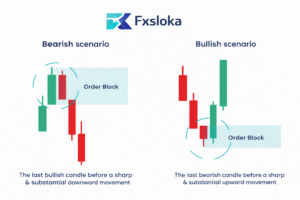
An Order Block is a price zone where institutions (banks, hedge funds, big players) placed large buy or sell orders.
These zones often become:
- Strong support
- Strong resistance
- Areas where price returns before a big move
Simple definition: Order Blocks are the footprints of smart money.
Retail traders see random candles, Smart money traders see, “This is where institutions entered.”
Bullish Order Block (Buy Zone)
A bullish order block forms when:
- Price is falling
- Institutions accumulate buys
- Then price explodes upward
The last bearish candle before the big up-move becomes the bullish order block zone.
Bearish Order Block (Sell Zone)
A bearish order block forms when:
- Price is rising
- Institutions distribute sells
- Then price collapses downward
The last bullish candle before the dump becomes the bearish order block zone.
What Are Fair Value Gaps (FVGs)?
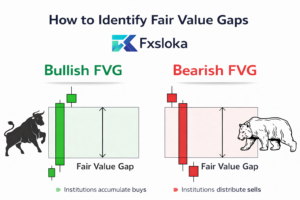
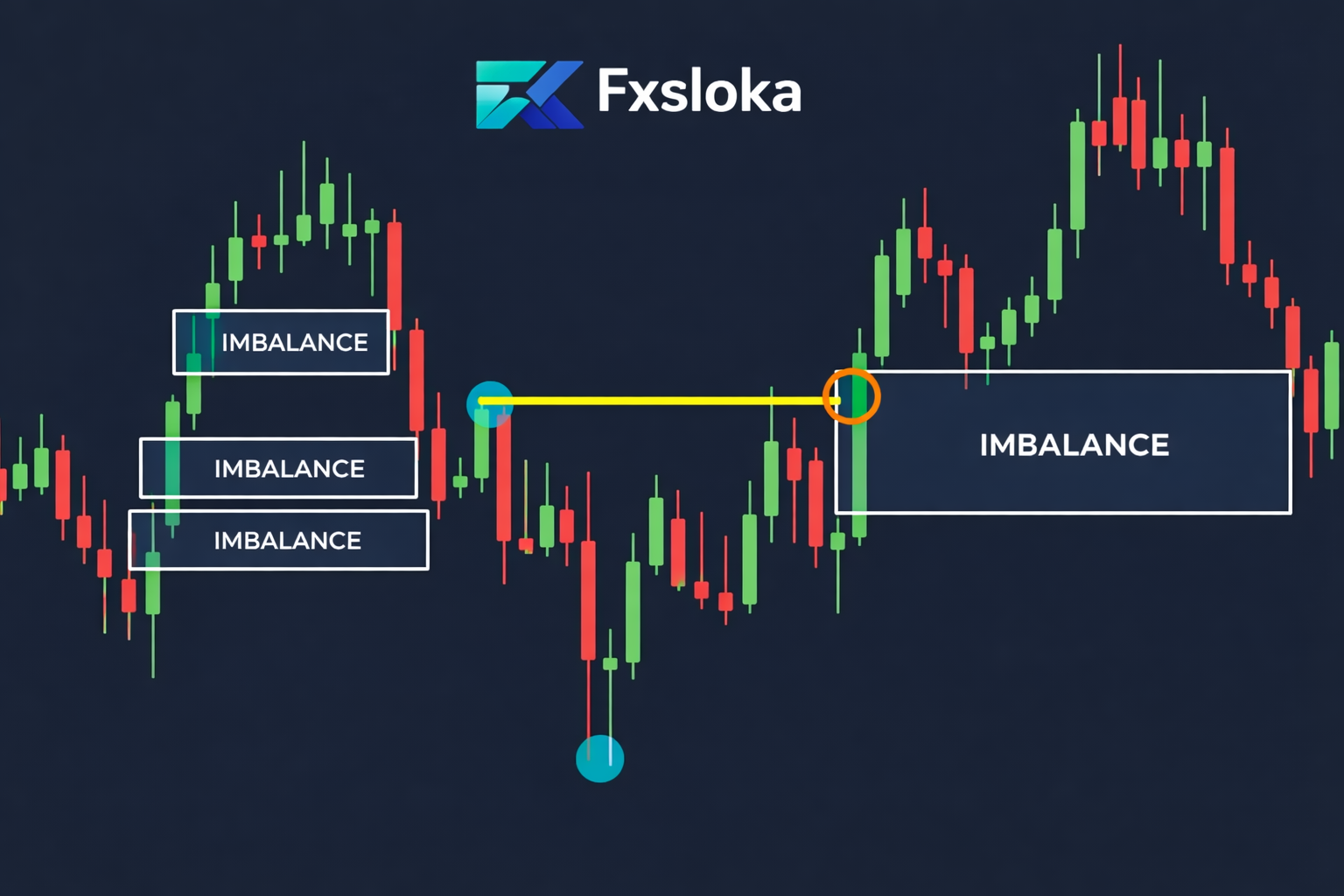
A Fair Value Gap is a price imbalance. It happens when price moves so aggressively that it leaves a “gap” in liquidity. Think of it like this, The market moved too fast…So later, it often comes back to “fill” that imbalance.
How an FVG Forms
An FVG usually appears when you see:
- A strong impulsive candle
- Very little trading in between
- Price skipping levels
That creates an imbalance zone.
Simple rule:
Price loves to return to Fair Value before continuing.
That’s why FVGs are powerful entry zones.
Order Blocks vs Fair Value Gaps (Key Difference)
Feature | Order Block | Fair Value Gap |
Represents | Institutional entry zone | Market imbalance zone |
Forms from | Last candle before reversal | Aggressive impulsive move |
Acts like | Support/Resistance | Magnet zone (price fills it) |
Best use | Entries + reversals | Continuation setups |
How Institutions Use These Zones (The Truth)
Here’s what usually happens:
- Retail traders chase breakouts
- Institutions need liquidity
- Price is pushed into an Order Block
- Stops get hunted
- Smart money enters
- Real move begins
So instead of trading after the move…You learn to trade where the move begins.
How to Spot an Order Block Properly
Checklist:
- Strong move away (displacement)
- Break of structure after leaving the zone
- Price returns to the zone later
- Confluence with liquidity sweep or FVG
Beginner Mistake:
Not every candle is an order block.
A true order block must lead to:
- A major reversal
- Or a strong continuation
How to Trade Using OB + FVG Together (High Probability Setup)
This is one of the cleanest SMC setups:
Step-by-step:
- Identify trend direction
- Wait for liquidity sweep
- Mark the Order Block
- Look for an FVG inside it
- Enter on mitigation
- Stop goes beyond OB
- Target previous highs/lows
This is called:
Order Block + Fair Value Gap Confluence
And it’s one of the most used institutional models.
Practical Example (Bullish Setup)
- Price sweeps lows
- Enters bullish order block
- FVG forms
- Price taps imbalance
- Rally begins
That is literally smart money entry.
Risk Management Reminder (Fxsloka Rule)
SMC is powerful…
But no setup is guaranteed.
Always follow:
- Risk only 1–2% per trade
- Stop-loss beyond the OB
- Don’t overtrade
- Wait for confirmation
Fxsloka is about trading responsibly — not gambling.
Final Thoughts
Order Blocks and Fair Value Gaps aren’t magic. They’re just a way of seeing what the market is really doing:
- Where liquidity sits
- Where institutions entered
- Where price is likely to return
Once you train your eyes, charts stop looking random.
They start looking logical.
Check our article on Break Of Structure