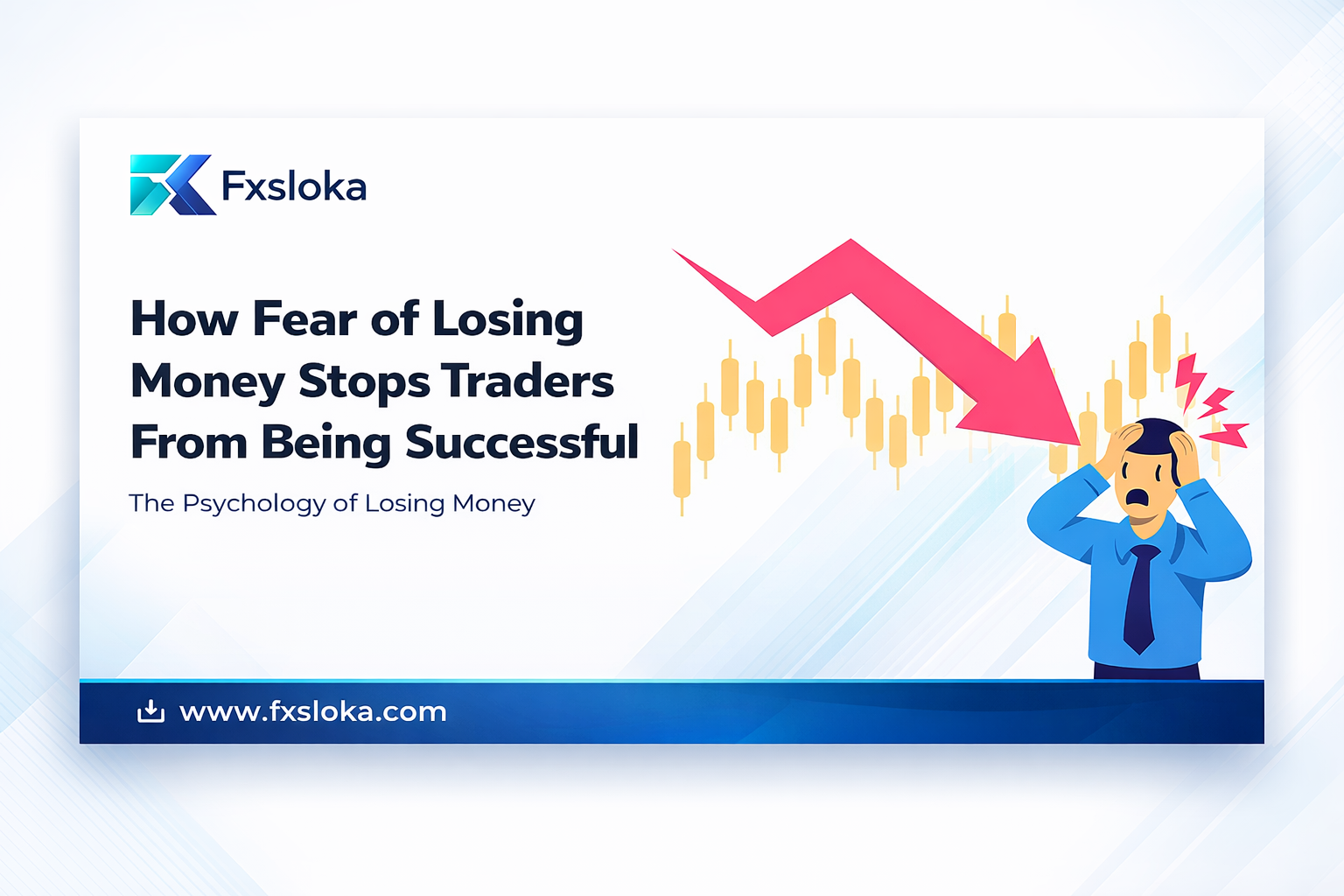
Trading is often seen as a game of charts, indicators, and strategy. But in reality, the biggest battle most traders face isn’t on the screen — it’s in their mind. One of the most powerful emotional forces in trading is the fear of losing money, and it silently prevents many traders from ever becoming consistently profitable.
Fear doesn’t just cause stress. It shapes decisions, destroys discipline, and turns even good strategies into inconsistent results. Understanding how fear works is the first step toward breaking free from it.
Why Fear Controls So Many Traders
The fear of losing money is natural. When real money is at risk, the brain treats trading like danger. Even if a trader has studied setups and practiced entries, emotions often take over the moment price starts moving.
A trader might enter a trade confidently, but the moment the market pulls back slightly, thoughts begin:
“What if this trade fails?”
“What if I lose again?”
“Should I just exit now before it gets worse?”
This emotional reaction shifts trading from a planned process into a survival response.
Loss Aversion: The Hidden Psychological Trap
One of the main reasons fear is so powerful is something psychologists call loss aversion. This means that the pain of losing money feels much stronger than the joy of gaining the same amount.
For example:
- Making $5,000 profit feels good
- Losing $5,000 feels twice as painful
Because of this imbalance, traders often make irrational decisions to avoid emotional discomfort rather than to follow their strategy.
How Fear Shows Up in Real Trading Behavior
Fear doesn’t always look obvious. It often appears in subtle habits that slowly damage performance.
Closing Winning Trades Too Early
Many traders take profit too quickly because they are afraid the market will reverse.
You’ll often see this pattern:
A trade moves into profit → trader exits early → market continues running perfectly.
The analysis was correct, but fear prevented the trader from allowing the setup to play out.
Hesitating on Good Setups
Fear also causes traders to freeze.
A trader spots the perfect entry — trend aligned, structure clean — but instead of executing, they hesitate:
“What if this one loses too?”
They skip the trade… and then watch the market move exactly as expected.
This creates frustration, regret, and a loss of confidence over time.
Moving Stop Losses and Avoiding Being Wrong
Another common fear-based mistake is refusing to accept small losses.
Instead of taking a planned stop loss, traders move it further away hoping the market will come back.
This turns a small controlled loss into a much bigger problem — not because the strategy failed, but because emotion took control.
Professional traders accept losses as part of the business. Struggling traders take losses personally.
The Endowment Effect: Emotional Attachment to Trades
Fear is amplified by another bias called the endowment effect — the tendency to become emotionally attached to something once we own it.
In trading, this looks like:
- Seeing profit and thinking “This money is mine now”
- Feeling panic when price pulls back
- Exiting early just to protect unrealized gains
The trade becomes emotional instead of logical.
Why Fear Prevents Long-Term Consistency
The real danger of fear is that it creates inconsistency.
Fear leads to:
- Cutting winners short
- Letting losers run
- Skipping good trades
- Overreacting to market noise
- Constant second-guessing
Even with a profitable strategy, these habits make results unpredictable.
Trading success isn’t about avoiding losses — it’s about managing emotions while following a system.
How Traders Begin to Break Free From Fear
Fear doesn’t disappear overnight. But it becomes manageable when trading becomes structured.
Successful traders reduce fear by focusing on:
- Clear entry and exit rules
- Proper stop-loss placement
- Small, controlled risk per trade
- Accepting losses as normal
- Trusting the process over emotions
Most fear comes from risking too much or trading without a plan.
When risk is controlled, the mind stays calm.
Final Thought: Trading Success Requires Emotional Discipline
Every trader loses money sometimes. The difference is that successful traders don’t let fear control their decisions. They treat trading as a long-term process, not an emotional rollercoaster.
When you learn to manage risk, trust your strategy, and accept uncertainty, fear loses its power — and consistency becomes possible.